Blog

  • For the Boys: The Reality Check We All Need

    For the Boys: The Reality Check We All Need

    For the Boys: The Reality Check We All Need

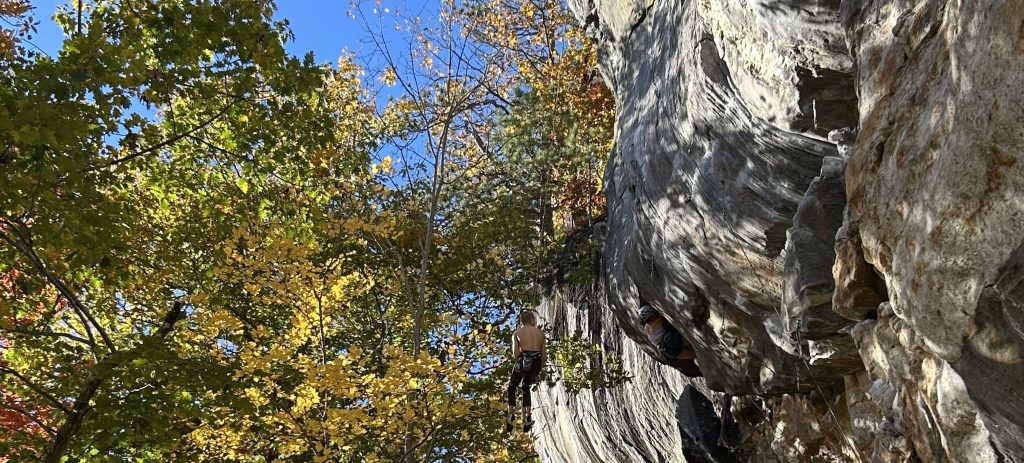
    So here I am, trying to move into my new condo. Real life is starting, and I am completely unprepared. All my life has been either roses and support or an endless cycle of distractions—social media, video games, anything to avoid dealing with real problems. Now, faced with the harsh realities of adulthood, I realize how little I know about handling important life tasks—like reading endless legal mumbo jumbo that might as well be written in an alien language.

    Take my latest battle with Volvo. My car needed repairs, but despite it being just 5,000 km past the warranty, they refused to cover the full cost. It took them seven weeks just to decide whether they’d help, then another three days to start the work—without even having the necessary parts. I’ve been without a car for eight weeks. No courtesy car, minimal support. They offered only $1,000 toward a $5,500 repair, even though Quebec laws should have protected me. But trying to get help from the Office of Consumer Protection was another battle—phone lines too busy, emails dragging on for days. Nothing moves unless you force it to.

    The Death of Community Support

    One thing I’ve realized: community support is dead. People don’t care anymore. Everyone is locked in their own little bubble of comfort, avoiding resistance at all costs. Need help? Be prepared to wait. Days, weeks—who knows how long—because efficiency has taken a backseat to convenience.

    And here’s the kicker—I’m guilty of it, too. When someone texts me, I take my sweet time responding. If someone calls, I ignore it and send a text back later, pretending I missed it. I contribute to the same problem I complain about.

    I titled this post For the Boys for a reason. I don’t think men and women face these struggles the same way, and we definitely don’t cope in the same way. Jonathan Haidt, in The Anxious Generation, talks about how boys are disengaging from real life at an alarming rate. I feel it. I’m almost 30, and real life is catching up fast. Unlike video games, there’s no steady stream of achievements or dopamine hits for handling life’s challenges. Sure, you get a paycheck, but it never feels like enough. Years of easy gratification—gaming, weed, scrolling—have left me unprepared for the grind of real life.

    The Illusion of Independence

    I thought I was independent, but in reality, I was just isolating myself and ignoring my problems until everything came crashing down. When my Volvo’s turbo blew, I sat on it for days before even mentioning it to my dad. Not because he wouldn’t help—he always does—but because I hate adding to his plate. Instead of tackling problems head-on, I let them sit and fester, living in an anxiety fog that makes everything worse.

    If you’re reading this looking for answers, I don’t have them. All I can do is share my experience. Maybe you can relate. Maybe you have advice. Maybe we can figure it out together.

    The Power of Being the Squeaky Wheel

    My grandfather used to say, The squeaky wheel gets the oil. Translation: if you want something done, don’t hesitate to ask—loudly and often. I hate this idea. I hate imposing on people. I always assume they have their own problems and don’t need mine, too. But the reality is, everyone has something going on, and if you don’t make noise, you’ll be ignored.

    Looking back, my fight with Volvo dragged on because I wasn’t calling every day. People prioritize what’s in their face. If you don’t force them to pay attention, they’ll push your problem to the bottom of the pile.

    In The Courage to Be Disliked, I learned that no matter what you do, someone won’t like it. You can be the nicest person in the world, but if you ask for something, people will resist because it disrupts their routine. Companies like Volvo can eat a $5,500 repair cost without blinking, but they fight tooth and nail to avoid setting a precedent. The government has laws to protect consumers, but when their offices are overloaded, the individual always loses. And that individual? That’s you. That’s me.

    Why This Hits Harder for Men

    I think this disengagement from real life is hitting men harder. When faced with frustration, we retreat—into gaming, drinking, drugs. Women struggle too, but they seem to have an easier time reaching out to friends and family, finding support. When I vent about real struggles, it feels like people get annoyed unless I pretend everything is fine. So I bottle it up. I isolate. The cycle continues.

    I don’t have a clear answer, but I know this: when you change, the people around you either change with you or drift away. That’s terrifying, but it’s necessary. I don’t know where to start, but I know I need to. If you’re feeling the same way, maybe we can figure it out together.

    The real world isn’t going to hand us easy wins. It’s messy, frustrating, and unfair. But if we don’t step up and start fighting for ourselves, who will?
  • How I build Confidence

    How I build Confidence

    This morning, I was reading The Courage to Be Happy, which explores Adlerian psychology. The book is framed as a dialogue between a young man and a philosopher, discussing how to apply Adler’s ideas to life. The central message is that happiness comes from having the courage to live your life on your own terms instead of letting others dictate it.

    There’s a fascinating section about confidence. The philosopher explains that confidence is a process: by accepting yourself, you develop confidence in others. In turn, this trust enables you to contribute to their lives. As you see yourself making a difference, your self-confidence grows, reinforcing the cycle.

    This concept resonated with me. For years, I struggled with the idea of confidence. I believed it was something people were either born with or not. I saw myself as someone who didn’t have it, which affected many aspects of my life, especially in school. I constantly compared myself to others, feeling that I wasn’t smart enough or capable of contributing. I would stay quiet in class, afraid my questions were “dumb.” This self-image became a vicious cycle: since I saw myself as incapable, I stopped trying. I didn’t study because I believed it wouldn’t make a difference. This mindset persisted throughout school and beyond.

    After I graduated, things got even worse. Without the structure of school, I felt completely lost. I didn’t want to pursue a career in my field of study and had no clear direction. However, I continued working as a coach and training as a climbing athlete. This helped to some extent, but when I decided to turn coaching into a career, I was overwhelmed by imposter syndrome. I thought, I’m not a psychologist or kinesiologist—how can I really contribute? I felt like a fraud and struggled to connect with the people I coached. I was constantly self-conscious and wanted to escape those situations.

    Though I’ve made progress, I still face challenges in connecting with clients. At first, I believed coaching was purely about teaching what you know. In that dynamic, the coach is the expert, and the client is the learner. However, I’ve realized that coaching isn’t just about sharing knowledge. Every person has a unique level of understanding, and their “coachability” varies. I often feared I wasn’t knowledgeable enough and that sounding unprofessional would undermine my authority.

    Recently, I had a breakthrough: just being there is often enough. I used to think clients expected a perfect, customized plan from the first session. But how could I create something perfect without truly knowing them? My early experiences with private clients were rough because I was too self-conscious to truly listen. This prevented meaningful connection and understanding.

    Now, I define “being there” in three ways: physically, intellectually, and spiritually.

    • Being there physically means being present in person or available to support.
    • Being there intellectually involves discussing facts and practical knowledge. For example, telling someone, “To strengthen your fingers, train them two or three times a week.”
    • Being there spiritually is harder to define but essential. It’s about forming a deeper emotional connection—going beyond facts to explore how those facts affect a person’s thoughts and feelings. This level of connection fosters mutual understanding and growth.

    Some clients are naturally open and emotionally aware, allowing us to quickly reach this deeper level. Others are more guarded, and it takes time to connect with them. When we remain on the intellectual level, coaching often stays in the realm of planning and programming. However, when a client opens up, we enter what I call “spirit coaching.” In this space, there is no fixed recipe. We learn together by exploring their thoughts, emotions, and goals.

    Let’s revisit the finger-strength example. If a client asks me how to get stronger fingers, I could give them a training plan and explain why it works. That would be an intellectual exchange. But if we engage spiritually, I might ask, “Why do you feel you need stronger fingers?” This could lead to various responses:

    • “I feel weak on the wall.”
    • “My friend told me it’s important.”
    • “I don’t know. Isn’t that just what climbers need?”

    Through this dialogue, we uncover deeper motivations and beliefs. This process not only helps the client clarify their goals but also strengthens our connection, allowing us both to grow.

    Being there intellectually gives someone knowledge. Being there spiritually creates a two-way relationship where both coach and client learn and evolve. This realization was transformative for me. It showed me that I can help people even if they know more than I do in certain areas. My experiences and emotional insights offer unique value. If life were simple and predictable, coaching would be easy or even unnecessary. But it’s not—everyone is unique, and that uniqueness shapes how we connect and grow together.

    This understanding has changed my approach to coaching. Initially, coaching often starts with intellectual guidance based on universal principles. Over time, as the relationship deepens, it evolves into a more personalized and spiritual process. This is why it’s so important to work with clients over multiple sessions. As trust and understanding build, the coaching becomes more tailored and impactful. Achieving that kind of connection and transformation isn’t possible from the very beginning—it requires time and presence.

    If we circle back to The Courage to Be Happy, it all makes sense. I started my journey without accepting myself. I didn’t believe I had what it took to help others because I saw coaching as purely intellectual—the more I know, the more I can coach. But now I understand that true coaching is more than just knowledge. It’s about connection. The more I feel and relate to someone, the more I can truly help them.

    Once I build that connection, I feel confident in my ability to contribute. Through that contribution, I learn to accept myself more. It’s a continuous process—building confidence by helping others, growing through shared experiences, and finding fulfillment in both giving and receiving. Confidence is something I’ve always had, it was just hiding under a lack of self acceptance.

    Now the question is: how do I self-accept? That’s the difficult part, and it still needs work, but I’ve found a starting point. The first step is to recognize where and when you are. I used to spend too much time lost in my thoughts, constantly planning and overthinking. I wasn’t living in the moment. But being present—here and now—allows me to listen, connect, and then plan from a place of clarity and understanding.

    The second change was in how I view life—my life. I used to think life was more or less the same for everyone, shaped by what they did. Now, I see it differently. It’s not only the actions you take that define who you are, but what you get out of those experiences. Life is subjective—our personal adventure within the larger journey we all share.

    What you do can’t really be shared—your actions are your own. But what you learn from those actions can be shared. That’s the beauty of this collective journey. We’re all on the same rocky boat. Some people isolate themselves in the depths of the ship and grow seasick. Others come up to the deck, each doing their thing, but working together to make the ship sail. I want to be the latter and I want to help people get out of the depths.

    For me, the key to self-acceptance is embracing this perspective—living in the moment, learning from my experiences, and sharing those lessons with others. It’s not always easy, but with time and presence, I’m learning to thrive in both my life and my coaching.

  • Hikikomori : The pulling inwards

    Hikikomori : The pulling inwards

    Isolation. What a concept. Whenever I think about it, two forms come to mind: isolating a specific move in climbing and isolating oneself socially. At first glance, they seem like entirely different ideas, but it’s worth exploring how they relate.

    In climbing, focusing on one particular move can be incredibly helpful. You gain more energy for that move alone, which leaves room for small errors and allows you to learn the subtle nuances of the movement. However, a climb is more than any single move: previous moves inevitably affect future ones. Eventually, you need to link each isolated movement back to the whole sequence in order to grasp the bigger picture of the climb.

    Social isolation, on the other hand, involves withdrawing—either physically, by staying away from others, or virtually, by remaining online instead of engaging in person. For someone who struggles with anxiety, fewer real-world social interactions can feel like a relief. Yet ironically, the only way to truly manage that anxiety is to practice talking to people—even when it feels awkward. It’s like trying a new climbing move for the first time: you might want to isolate it to lessen the discomfort, but if you never connect that move to the rest of the sequence, you won’t reach the top.

    This is where the analogy starts to shift. In climbing, it’s obvious: if you don’t do every move, you simply can’t get to the top. In life, it used to be just as obvious that isolation could hinder your growth, because boredom would eventually push you to seek real human connection… most of the time. But as technology became more advanced and more accessible, it became easier to stay entertained—and feel connected—while remaining physically alone. Social media, video games, endless streaming services, and vast virtual communities make it possible to be “alone” without ever feeling bored.

    I experienced this shift when I was about 15. In 2010, my family got high-speed internet, an online gaming platform, and I got my first iPod Touch. From that point on, everything changed. I spent endless hours gaming and chatting online, all from the comfort of my room. I hardly went out at all until I got my driver’s license.

    Before 2010, I had no choice but to go out more often. Both my parents worked, and my younger brother, who had his own challenges, needed a lot of attention. Because of that, I spent much of my free time outside, often alone. My neighborhood didn’t have other kids nearby, so if I wanted to see friends, my parents had to drive me. They couldn’t always make it happen, and when they said no, I would be stuck at home, but at least I felt close to nature and grounded. I would go and see my grandparents a lot because they lived close by and they were the only friends I could walk to see.

    Once I discovered gaming, YouTube, and other online content, the urge to go out gradually disappeared—I was alone yet constantly entertained, and my social skills took a dive. I could barely talk to girls, and I ended up with only two friends. We smoked a lot of weed together and played a lot of video games. Even when I got my first car and we could hang out in person, I still felt a pull toward isolation.

    Eventually, my friends and I got tired of doing the same old routine. We’d meet up, get bored, then go our separate ways. I slipped back into old habits, finding excuses to stay in. When I moved away for university, alone, I felt an overwhelming dread. I was always homesick and anxious, and all I wanted was to retreat to my apartment. In Japan, they call this hikikomori—pulling inward. That’s exactly how it felt: a constant tug toward isolation. I became more anxious around people, convinced I was letting everyone down. I felt unreliable and unable to change.

    My twenties were shaped by that anxiety and isolation. Of course, there were bright spots—like escaping on climbing trips with friends—but as soon as I came home, the same habits returned, and the shame followed.

    I’m not entirely sure what changed or when, but I finally realized I was the only one who could make a change. I read a line in a book that said, “When you change, the people around you change, too.” It hit me hard because I’d been asking questions like, “Why is this so difficult? What will people think? When will this end?” I felt out of control. But I saw that I’d basically stopped trying to be human—I was a hermit in disguise.

    Now, at least, I recognize when I’m isolating myself. It’s still a challenge. I live with my dad, and we hardly have deep conversations. We’re both alone under the same roof. In a couple of weeks, I’m moving out with my girlfriend to be closer to work, and I’m hoping that distance will give me the perspective I need to reconnect with my dad. I only realized how bad things were getting when I caught myself feeling annoyed if he happened to be home when I returned—because then I couldn’t fully isolate myself and had to interact with him. Bad, I know.

    I’m learning to treat every moment as an opportunity, rather than trying to force every moment to meet my perceived needs—needs that aren’t even real. Deep down, I know I love connecting with people and being part of a community, but the habit of staying in has carved deep grooves into my brain. Unlearning this takes time.

    I do feel myself changing, albeit slowly. I’m hopeful that moving will steer me further in the right direction. Which direction is that? I’m not entirely sure. But I do know that trying to control everything doesn’t work. Life goes on, so I might as well jump in and start living it. Anyone who wants to jump in with me is more than welcome. Let’s see where we end up—together.

  • It’s not a competition.

    It’s not a competition.

    Recently, I’ve been on a quest for knowledge. As someone who’s coached teens for years, I’ve seen firsthand how difficult it can be to separate life from competition. Today’s youth grow up immersed in social media, often surrounded by hundreds of peers online. These platforms nurture a unique kind of competitiveness—a drive that seeps into every facet of life. I first noticed this shift when I started using Instagram to share my climbing adventures.

    In the early days, climbing was all about adventure with friends. Sure, there was always a hint of rivalry—my friends and I would go bouldering, racing to complete a move or a boulder before someone else. But that competition was healthy: we climbed on the same holds, shared the thrill of each move, and cheered each other on. It wasn’t about outdoing one another; it was about growing together.

    Even during official competitions, I found joy in the process rather than simply in winning. My opponents were often so much stronger that just making it to the finals felt like a victory. I reveled in observing others’ techniques and learning from their expertise. The camaraderie among strong climbers created an environment where inspiration and progress fed off one another.

    Then came Instagram. At first, it was exhilarating—I felt I could connect with people faster and on a deeper level. But as I built expectations, the platform evolved into something more demanding. I became obsessed with followers and likes, tying my performance to virtual approval. Missing a milestone, like nailing that green V10 or holding on to a tiny hold, transformed a training session into a nightmare simply because I couldn’t share another “achievement.”

    Before long, my training shifted to mimic what others were doing. I lost myself in a relentless chase for benchmarks, convinced that hitting a specific strength level was the key to conquering a climbing grade. But that’s not who I am. I’ve never been about taking the easy route or simply overpowering a climb. For me, climbing has always been a pursuit of knowledge—a journey of understanding not just physical strength, but also how to manage life’s challenges.

    This misguided focus eventually led me into a deep depression and bouts of severe anxiety. Climbing morphed from a dream into a relentless nightmare. I overtrained to the point of losing touch with my body, ignoring both my inner voice and the advice of others. All I craved was the validation of sending up monumental projects and racking up likes and comments. Even writing these words now, I’m astonished at the extremes I once went to. Those were dark years, filled with self-doubt and isolation, during which I lost touch with many good friends and, in a sense, with myself. I became painfully self-conscious—feelings I’d experienced before, but now they were constant and overpowering.

    Before Instagram, a few sincere words of encouragement were enough to affirm my progress. A couple of “good job” comments were all I needed to know I was on the right path. But with social media, the numbers kept climbing, and the true joy of learning to climb slowly faded into the background.

    A breakthrough came when I read this quote from The Courage to Be Disliked by Ichiro Kishimi and Fumitake Koga:

    “The pursuit of superiority is the mindset of taking a single step forward, not the mindset of competition that aims to be greater than other people.”

    In that moment, I recognized what Instagram had done to me. I had shifted from striving for personal growth alongside my friends to obsessively trying to surpass everyone, both in real life and online.

    We’re all, to some degree, wired this way. Feelings of inferiority and superiority are natural and, as the authors explain, can propel us toward our ideal selves—or signal when we need to change direction. The problem arises when these feelings solidify into complexes, spawning thoughts like, “If I don’t hit this training benchmark like that other person, I won’t be as good a climber.”

    For years, I fixated on one particular benchmark: mastering one-arm hangs. I was convinced that achieving this would transform me into an exceptionally strong climber, but it only resulted in constant elbow pain from pushing my limits daily. To anyone reading, that might sound foolish—I once judged others harshly for their missteps, especially when injuries occurred. The ironic truth is, I was projecting onto others the very self-destructive habits I imposed on myself, and it took years to see that clearly.

    A few months ago, everything began to change when I returned to reading and actively seeking knowledge. I asked myself, “What can I do differently this year to be more successful?” The answer was balance. Although I still find myself comparing my progress to others’, I can now recognize that impulse and work to counter it.

    Let me explain why climbing has become a profound teacher in my life. I work full-time in a climbing gym, where I train, coach, and set routes each week. My role allows me to work with climbers from all walks of life, helping them improve not just their athletic abilities but also the skills that carry over into everyday challenges. Planning, building strength, fostering self-confidence, and enduring difficult tasks—all these lessons in the gym mirror the challenges we face in life.

    Today, I worry about the way teens are thrown into life unprepared. My aim in writing and sharing these experiences is to raise awareness and connect with those who might feel lost or overwhelmed. I want to reach people eager for change or eager to learn. One of my personal goals is to reclaim my Instagram experience and use social media as a force for good. After all, these platforms have incredible power—power that can be harnessed for both positive and negative outcomes. My responsibility is to choose the good.

    Interestingly, research has shown that moderate physical challenges, like climbing, can boost mental health by releasing endorphins and enhancing cognitive functions such as problem-solving and resilience. This fascinating intersection of physical and mental growth only reinforces my belief that the lessons learned on the wall extend far beyond the gym.

    In the end, climbing isn’t just about reaching new heights—it’s about understanding ourselves and how we navigate life’s obstacles, both on and off the wall.

    Leave a comment